
Polarization of Light and Superposition
Abstract
The activity is for an introductory science course for non-majors as part of our core curriculum, some basic materials are provided so students can experiment with them while working as a group during the process. Teaching conceptual quantum mechanics to non-majors is often challenging. The quantum strangeness is difficult for students to understand and relate to. This activity is focused on one of the core concepts, superposition. Traditionally, physics students are forced to accept what they are taught in the classroom. However, the non-majors do not necessarily have the prior conception, and they can think outside the box. This activity is designed to help them overcome the mental barrier in quantum mechanics.
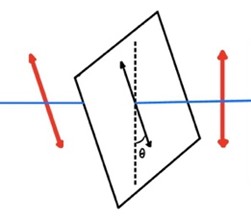
It consists of three models. The first is focused on Malus's Law and the concept of how angles between two polarizations can affect the light passing through them. It provides the foundation of quantitative skills needed in later parts of the activity. The second is focused on the effect of light passing through multiple polarizers to demonstrate the concept of superposition: a vertical photon is simultaneously at 45 degrees to the right and 45 degrees to the left. The third is focused on helping students relate to the strange concept of "one object is at two places at the same time." by extending to similar phenomena in everyday life.
Level: Undergraduate
Setting: Classroom
Activity Type: Learning Cycle
Discipline: Physics
Course: Non-majors Physics
Keywords: conceptual quantum mechanics, superposition, Malus' Law, polarization, photon
Downloads
Published
How to Cite
Issue
Section
License
Copyright (c) 2026 Michael ZhengCopyright of this work and the permissions granted to users of the PAC are defined in the PAC Activity User License.