
How Temperature Affects the Surface Behavior of Liquids?
Abstract
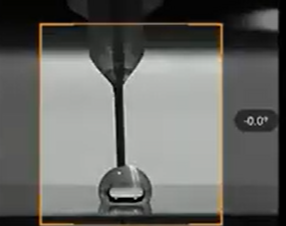
This laboratory activity employs guided inquiry to investigate how temperature modulates surface behavior by measuring the contact angle of polar and nonpolar liquid droplets on a solid substrate. Students work in teams to collect quantitative data at 20 °C and 60 °C using an optical tensiometer, then analyze changes in droplet shape, base diameter, and contact angle. Through successive phases—mystery observations, hypothesis development, instructor‑led concept refinement, and experimental extension—they link macroscopic wetting behavior to molecular kinetic energy and intermolecular forces. By comparing the magnitude of angle changes for each liquid, learners infer relative strengths of hydrogen bonding versus dispersion forces. The activity builds skills in data interpretation, scientific reasoning, and collaborative problem‑solving while reinforcing key principles of thermodynamics and surface science.
Level: Undergraduate
Setting: Laboratory
Activity Type: POGIL Lab (Learning Cycle)
Discipline: Chemistry
Course: Physical Chemistry / Surface Science
Keywords: surface tension, contact angle, intermolecular forces, temperature dependence, polar vs. nonpolar liquids, optical tensiometry, guided inquiry.
Downloads
Published
How to Cite
Issue
Section
License
Copyright (c) 2026 Abhimanyu Bhandankar, Omkar ShilkarCopyright of this work and the permissions granted to users of the PAC are defined in the PAC Activity User License.