
The Critical Path Method
Abstract
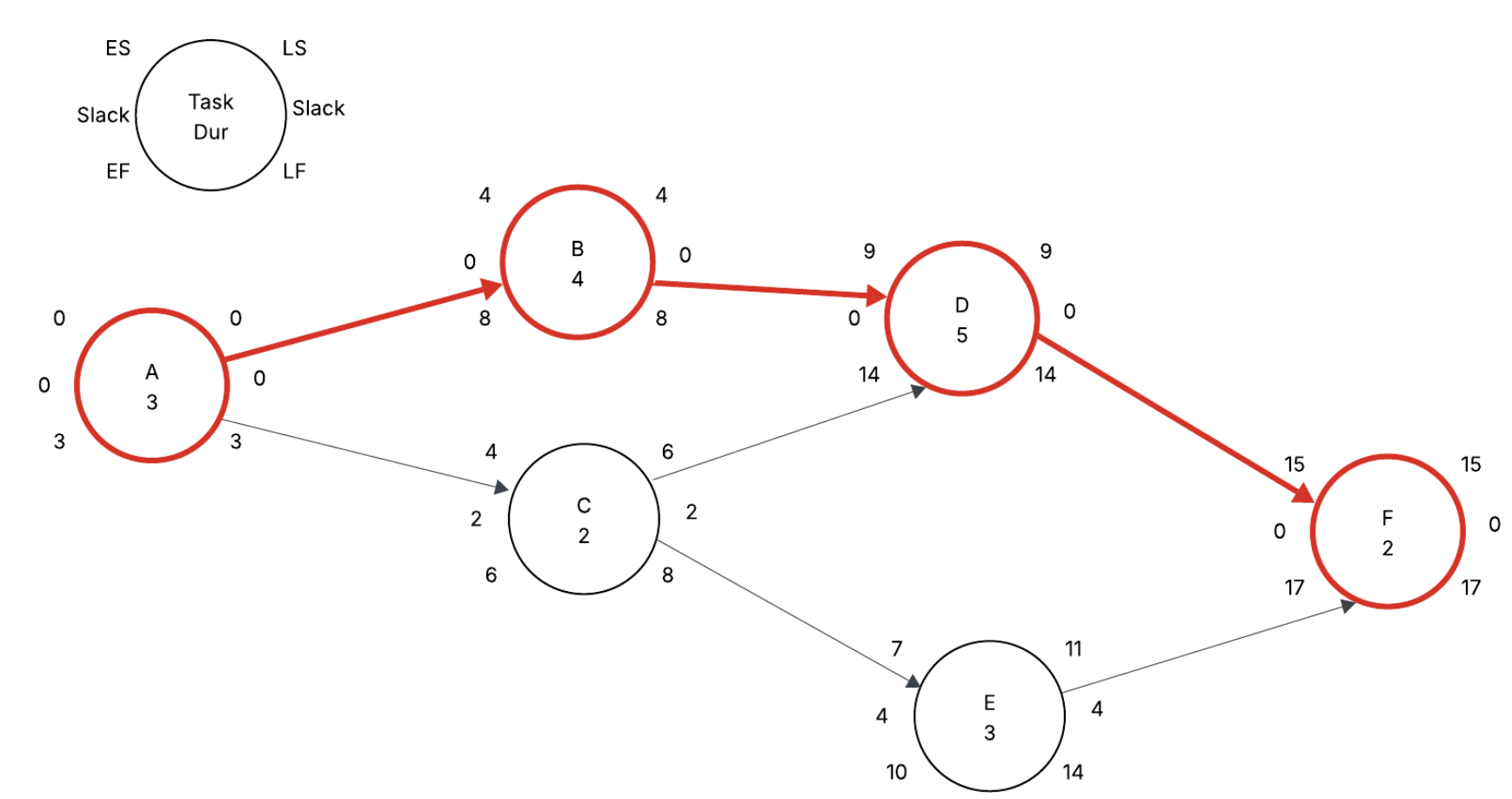
The activity introduces Critical Path Method (CPM) scheduling and guides students from interpreting a task table to constructing and analyzing a CPM network. Students learn how activities, durations, and dependencies translate into nodes and edges; how forward and backward passes establish ES/EF/LS/LF; and how slack informs schedule flexibility. The lesson emphasizes rules at merges (multiple predecessors) and splits (multiple successors), justification of the critical path using zero-slack evidence, and brief what-if analyses to see how changes propagate to project duration. Process-skill focus: Information Processing (C & D)—complete and accurate transformation of information. Learning objectives: (1) define core CPM terms and read CPM nodes/flows; (2) construct networks and perform forward/backward passes—including merges/splits—to compute ES/EF/LS/LF and slack; (3) determine and justify the critical path and total duration, and evaluate simple what-if schedule changes. No prior CPM knowledge is assumed.
Level: Undergraduate
Setting: Classroom
Activity Type: Learning Cycle
Discipline: Information Systems / Project Management
Course: Information Systems Design & Development
Keywords: Critical Path Method, CPM network, ES/EF/LS/LF, forward pass, backward pass, slack/float, critical path, dependencies, project duration, what-if analysis
Downloads
Published
How to Cite
Issue
Section
License
Copyright (c) 2026 Vanessa CooteCopyright of this work and the permissions granted to users of the PAC are defined in the PAC Activity User License.