
Global Health Causes of Death
Communicable & Noncommunicable Diseases
Abstract
This activity is designed for non-science majors to build skills in interpreting graphs, tabular data and types of data visualization in the context of Global health issues, infectious disease and sustainability. Students should have basic pre-requisite knowledge about causal agents of infectious diseases.
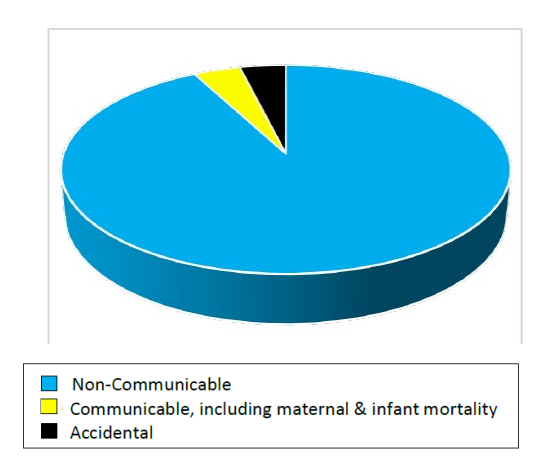
By the end of the activity 1. Students should be able to classify three types of major causes of death (COD) into their correct categories using the following sub-headings: Communicable, Noncommunicable and Accidental deaths.
2. Students should be able to identify infectious disease agents and determine if they are communicable or noncommunicable according to their common characteristics.
3. Students should be able to analyze the changes that occurred in COD over the last 120 years in an economically developed country, and predict how future COD will change in an economically underdeveloped countries.
Students should be able to demonstrate information processing skills, critical thinking and teamwork.
Level: Undergraduate
Setting: Classroom
Activity Type: Learning Cycle
Discipline: Biology
Course: Biology for non-scientists
Keywords: graph, table, visual, infection, disease, communicable, death, virus, bacteria, prion, protozoa, protista, fungi
Downloads
Published
How to Cite
Issue
Section
License
Copyright (c) 2026 Roberta HayesCopyright of this work and the permissions granted to users of the PAC are defined in the PAC Activity User License.